How Often Should You Schedule Pest Control
A consistent pest control schedule is the most effective way to keep your home pest-free
One of the most common questions we get from homeowners in Petaling Jaya is: "How often should I actually get pest control done?" It's a fair question — and the answer depends on several factors specific to your property.
Some homes need treatment every two months. Others do fine with quarterly visits. And a few low-risk properties can get away with annual inspections. The key is understanding what category your home falls into and building a schedule that prevents problems rather than just reacting to them.
Here's a practical guide based on what we see across hundreds of homes in Petaling Jaya every year.
The General Rule: Quarterly Treatment
For most residential properties in PJ, quarterly pest control — every three months — is the standard recommendation. This frequency works well because most professional treatments remain effective for roughly 60 to 90 days before their potency begins to fade.
Quarterly visits ensure continuous protection against common household pests like cockroaches, ants and spiders. Each visit reinforces the treatment barrier around your home, filling in any gaps that may have developed from rain, cleaning or general wear.
Think of it like servicing your car. You could wait until something breaks down, but regular maintenance prevents expensive problems. Pest control works the same way.
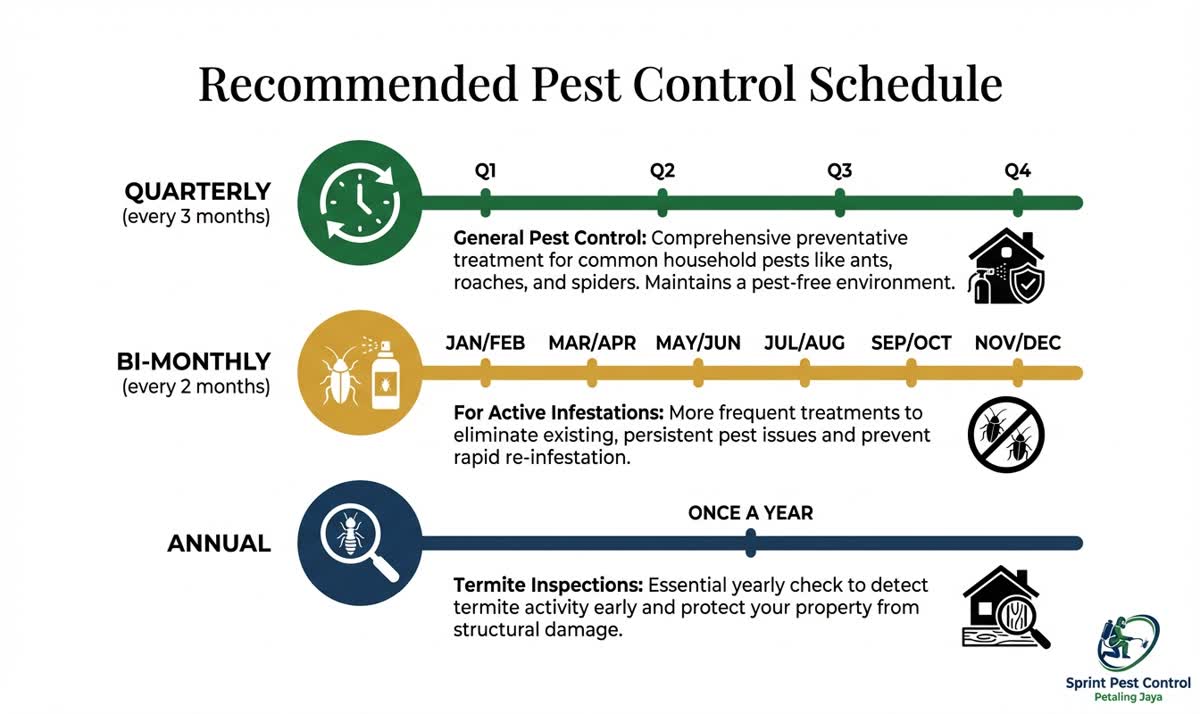
Recommended treatment frequencies based on your situation
When You Need Bi-Monthly Treatment
Some properties need more frequent attention — every two months or even monthly in severe cases. You likely fall into this category if:
- You've had a recent infestation — After eliminating an active pest problem, more frequent follow-up visits ensure the issue doesn't return. This is especially true for cockroaches and rats, which reproduce quickly.
- Your property is near green spaces — Homes adjacent to parks, vacant lots or wooded areas in PJ have constant pest pressure from surrounding habitats. Areas near the Kelana Jaya lake or other green corridors are prime examples.
- You live in an older building — Properties built before the 1990s typically have more entry points, aging timber and less effective original pest barriers. The older the building, the more vigilant you need to be.
- You run a food business — Restaurants, cafés and food preparation areas need stricter schedules, often monthly, to meet health standards and prevent infestations.
When Annual Treatment May Suffice
Annual pest control is the absolute minimum — and it's only appropriate for a narrow set of properties. Your home might qualify if it's a newer build (less than 10 years old), located away from green spaces, has no history of infestations and is well-maintained with good drainage and sealed entry points.
Even then, an annual visit should be a thorough inspection plus preventive treatment, not just a quick spray. The goal is to catch any early warning signs before they develop into active problems.
For termite inspections specifically, annual checks are the minimum regardless of your property type. Termites can cause catastrophic damage in silence, and early detection is the difference between a simple treatment and a major structural repair.
Factors That Affect Your Ideal Schedule
Property Age and Condition
Older terrace houses in established PJ neighbourhoods — SS2, Section 14, Taman SEA — are inherently more vulnerable. Decades of settling create gaps in walls, foundations and around pipe penetrations. These homes benefit most from quarterly or bi-monthly schedules.
Location and Surroundings
Your immediate environment matters enormously. Properties near construction sites, vacant lots, drains or food establishments face higher pest pressure. Even a neighbour's renovation can drive pests into your home temporarily.
Previous Infestations
If you've dealt with pests before, your property has proven it's attractive to them. The conditions that caused the first infestation — drainage issues, structural gaps, nearby food sources — likely still exist to some degree. More frequent treatment provides a safety net.
Seasonal Patterns in PJ
While Malaysia doesn't have cold winters that reduce pest activity, we do have monsoon seasons that affect pest behaviour. The inter-monsoon periods (March–April and October–November) often see increased termite swarming. The wet season drives rats and cockroaches indoors seeking shelter. Timing your treatments around these patterns improves effectiveness.

Watch for these signs that your current treatment schedule isn't enough
Signs Your Current Schedule Isn't Enough
Even if you're on a regular pest control plan, watch for these indicators that you may need to increase frequency:
- Pest sightings between visits — Seeing live cockroaches, ants or rats between scheduled treatments means the protection is wearing off too quickly.
- Droppings or damage — Finding new droppings, gnaw marks or signs of termites between visits indicates ongoing activity.
- Seasonal surges — If certain times of year consistently bring more pest activity, consider adding an extra treatment during those months.
- Changes to your property — Renovations, new landscaping or changes in neighbouring properties can alter pest pressure.
Building Your Pest Control Schedule
The most effective approach is to start with a professional assessment. A licensed technician inspects your property, identifies risk factors and recommends a tailored schedule. This isn't a one-size-fits-all decision.
Most pest control companies in PJ offer annual contracts with quarterly visits built in. These contracts typically cost less per visit than ad-hoc callouts and include free follow-up treatments if pests return between scheduled visits.
The bottom line: investing in a consistent schedule is always cheaper than dealing with a full-blown infestation. Prevention is the most cost-effective pest management strategy there is.
🔑 Key Takeaways
- Quarterly pest control (every 3 months) is the standard for most PJ homes
- Older properties, homes near green spaces and post-infestation situations need bi-monthly treatment
- Annual treatment is the minimum — suitable only for low-risk, newer properties
- Termite inspections should happen at least once a year regardless
- A professional assessment determines your ideal schedule based on your specific risk factors
Ready to Set Up a Pest Control Schedule?
Get a free property assessment and customised treatment plan from our licensed team. No pressure, no hidden fees.
WhatsApp Us for Free Assessment WhatsApp Us