Why PJ Terrace Houses Are Vulnerable to Pests
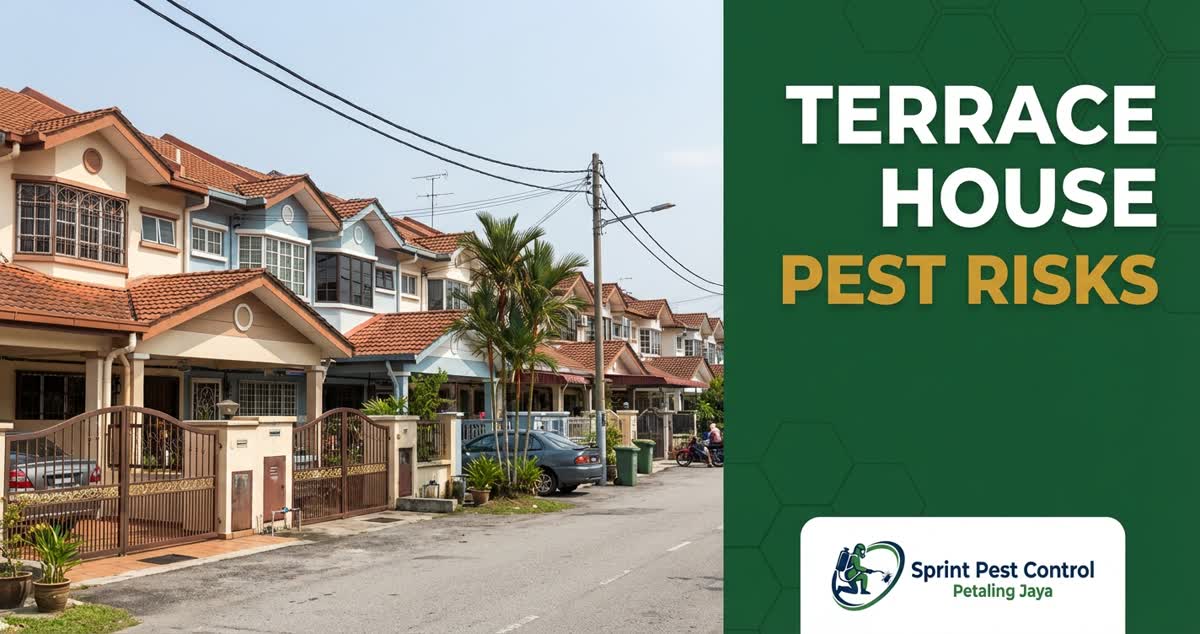
PJ's iconic terrace houses face unique pest challenges due to their design and age
If you live in a terrace house in Petaling Jaya, you already know the charm — the established neighbourhoods, mature trees and walkable streets. But there's a downside that most homeowners don't think about until it's too late: terrace houses are magnets for pests.
From cockroaches and rats to termites and ants, the very features that make terrace living convenient also create ideal conditions for infestations. And in PJ's tropical climate, those conditions exist year-round.
Here's why your terrace house in SS2, Taman SEA, PJ Old Town or any established PJ neighbourhood is more vulnerable than you might think — and what you can do about it.
1. Shared Walls Create Pest Highways
The defining feature of terrace houses — shared party walls — is also their biggest pest vulnerability. These common walls often have gaps, cracks and pipe penetrations that create direct pathways between homes.
When your neighbour has a cockroach or rat problem, it quickly becomes your problem too. Pests travel through wall cavities, along shared plumbing lines and through cable conduit gaps. In older terrace rows, decades of settling and minor structural movement have created even more entry points.
This is why treating just one unit in a terrace row often doesn't solve the problem. The pests simply retreat to an untreated neighbour and return once the chemicals wear off. Effective pest control in terrace houses really needs a coordinated approach.
2. Aging Timber Structures Invite Termites
Many terrace houses in PJ were built in the 1970s and 1980s, when timber was used extensively in roof trusses, door frames, window frames and built-in cabinetry. After 40 to 50 years, this wood has become prime feeding material for termites.
The older the timber, the more vulnerable it becomes — especially if it was never treated with termiticide during construction. Subterranean termites can enter through the smallest cracks in your foundation and work their way up through the walls to reach these timber structures. By the time you notice sagging door frames or hollow-sounding wood, the colony has been feeding for months.
Areas like Taman SEA and PJ Old Town, where some of PJ's oldest terrace houses stand, consistently report higher rates of termite infestations compared to newer developments.
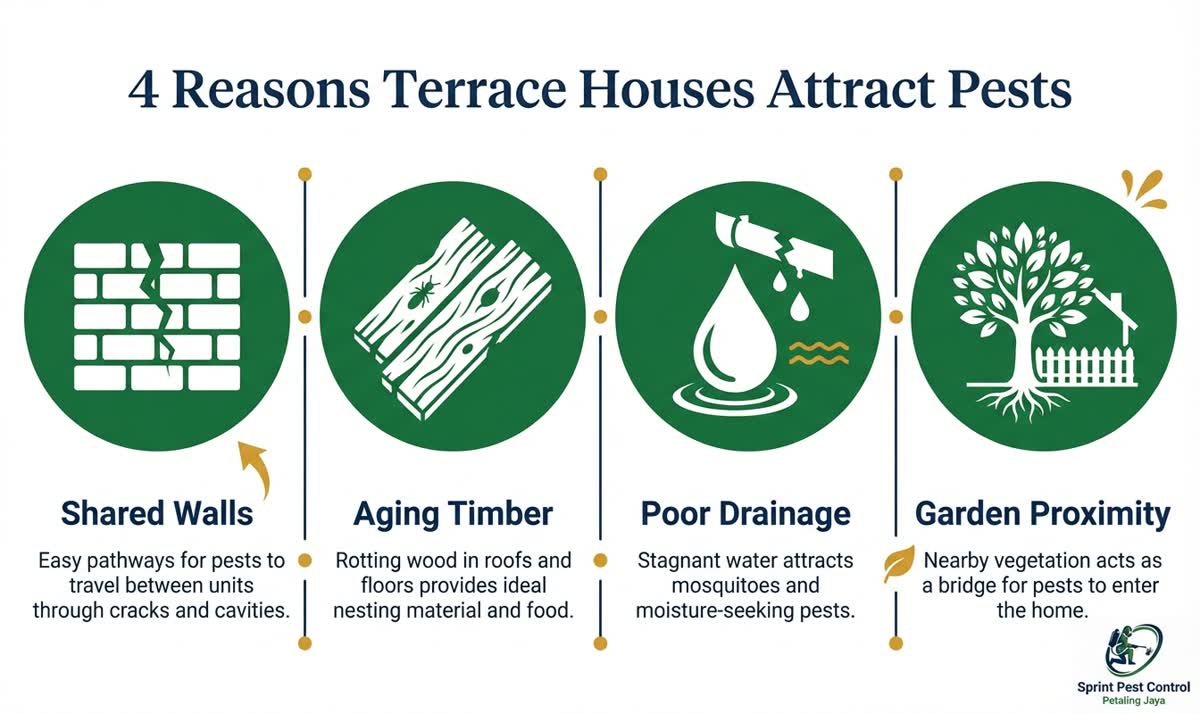
The four key factors that make terrace houses vulnerable to pest infestations
3. Poor Drainage Attracts Moisture-Loving Pests
Terrace house drainage systems in older PJ neighbourhoods are often undersized for today's rainfall patterns. Clogged or slow-draining back lanes, blocked monsoon drains and poor grading around foundations all create standing water — exactly what mosquitoes, cockroaches and rats need to thrive.
The back lanes between terrace rows are particularly problematic. These narrow spaces often accumulate debris, fallen leaves and stagnant water. Combined with limited sunlight and poor air circulation, they create a humid microclimate that pests love.
Foundation dampness from poor drainage also accelerates timber decay, making your home even more attractive to termites and wood-boring insects.
4. Garden Proximity Brings Pests Closer
Most terrace houses have small front and back gardens — and while they're lovely for kerb appeal, they also serve as staging areas for pests. Overgrown shrubs touching exterior walls give ants, cockroaches and even rats a direct bridge into your home.
Fruit trees attract rats and fruit flies. Compost bins and leaf litter provide shelter and food for all sorts of pests. Even well-maintained gardens can harbour pest colonies in the soil, especially in PJ's warm, moist conditions.
The proximity between your garden and your living space in a terrace house is much closer than in a bungalow or semi-detached home, meaning pests don't have far to travel to get inside.
What You Can Do: Terrace House Pest Prevention
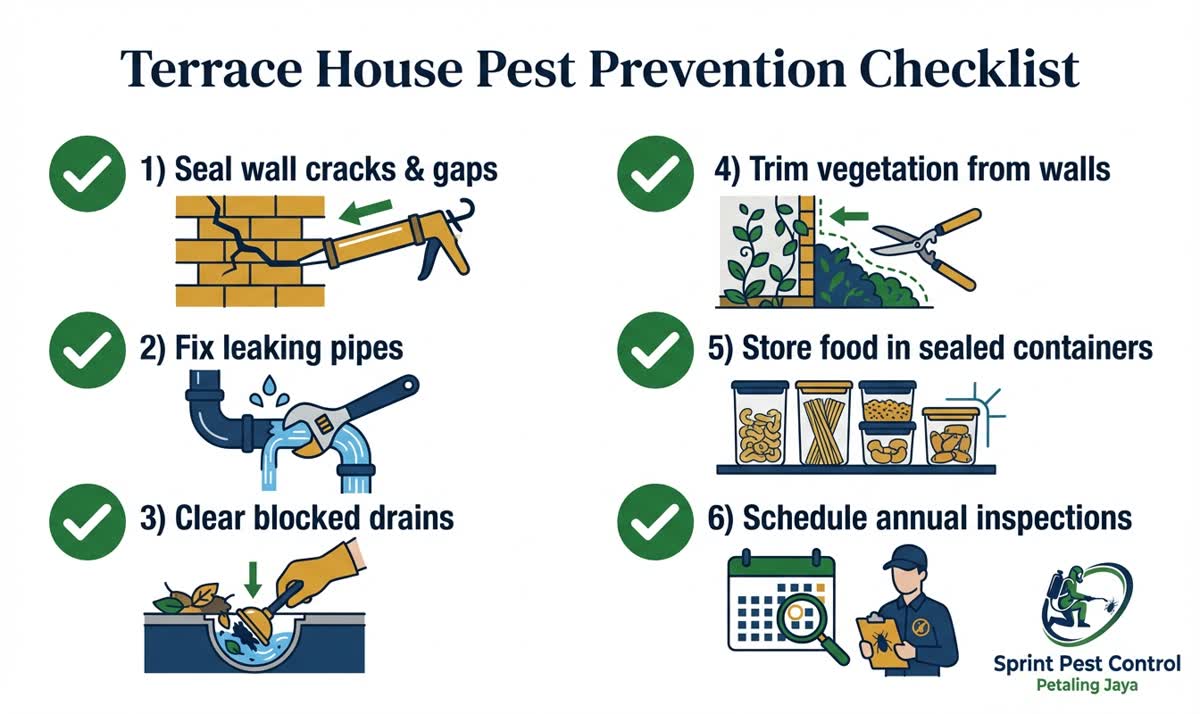
A practical checklist to reduce pest risks in your terrace house
The good news is that terrace house pest problems are preventable — especially when you take a proactive approach rather than waiting for an infestation.
- Seal cracks and gaps — Inspect shared walls, around pipes, cable entry points and along the foundation. Fill any gaps with cement or silicone sealant.
- Fix leaking pipes immediately — Even a small drip creates enough moisture to attract cockroaches and termites. Pay special attention to bathrooms and kitchens on shared walls.
- Keep drains clear — Clean your back lane drain regularly and report blocked public drains to MBPJ. Standing water is an open invitation for mosquitoes and rats.
- Trim vegetation — Keep plants at least 30cm away from exterior walls. Cut back overhanging branches and remove fallen fruit promptly.
- Store food properly — Use sealed containers for dry goods. Don't leave pet food out overnight. Keep bins tightly closed.
- Schedule annual inspections — Professional pest inspections catch problems early, before they become expensive. This is especially important for older terrace houses.
When Prevention Isn't Enough
If you're already seeing signs of pests — droppings, mud tubes, gnaw marks or live insects during the day — it's time to call in professionals. DIY treatments might knock down visible pests temporarily, but they rarely address the root cause, especially in terrace houses where pests move freely between units.
A professional pest control team can identify entry points, assess the severity of the infestation and recommend targeted treatment. For terrace houses, they can also advise on coordinating treatment with your neighbours for lasting results.
🔑 Key Takeaways
- Shared walls in terrace houses let pests move freely between homes
- Aging timber in 1970s–80s terrace houses is prime termite food
- Poor drainage creates breeding grounds for mosquitoes, cockroaches and rats
- Garden proximity gives pests easy access to your home
- Prevention works best when it's proactive and coordinated with neighbours
Worried About Pests in Your Terrace House?
Get a free inspection from our licensed team. We'll check your property and recommend the right treatment plan.
WhatsApp Us for Free Inspection WhatsApp Us