Termite Baiting System Installation — Ara Hill, Ara Damansara
Sentricon bait stations installed around the perimeter of the semi-D at Ara Hill, Ara Damansara
The Problem
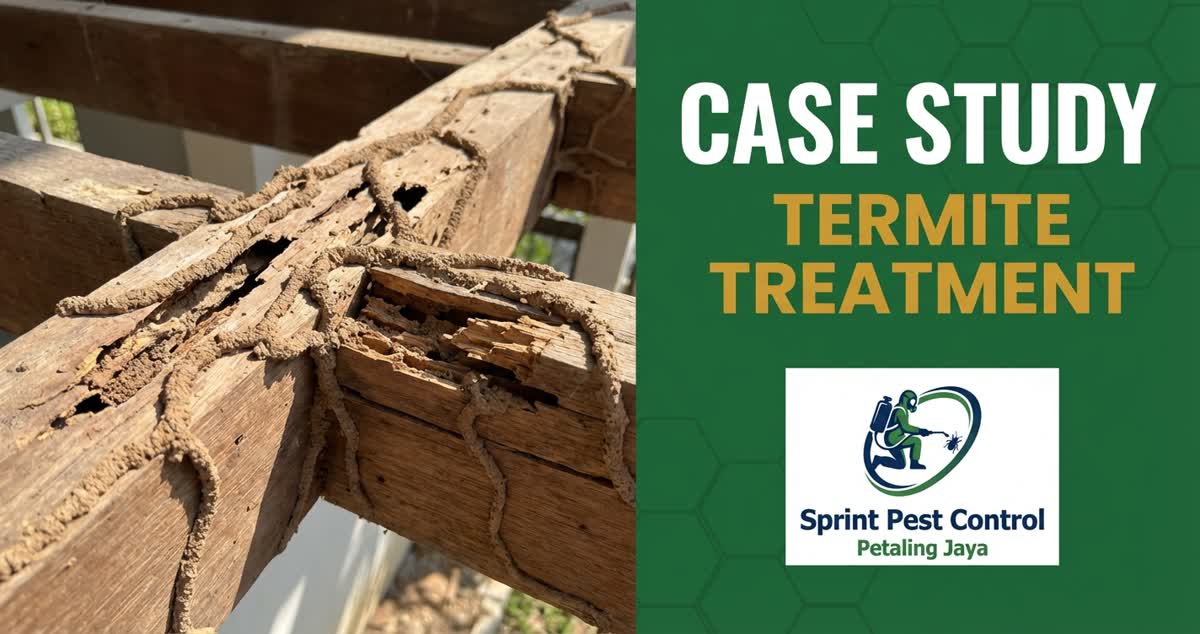
The homeowner at Ara Hill — a well-known semi-detached development in Ara Damansara — first noticed something was wrong when renovating their kitchen. Behind the kitchen cabinets, several mud tubes were running vertically along the wall, extending from the floor up to the ceiling junction. A closer look at the staircase wall revealed additional mud tubes that had been concealed behind a decorative shelf for what appeared to be months.
The family was understandably alarmed. Their semi-D was only 7 years old, and they hadn't expected a termite problem this early. They contacted Sprint Pest Control Petaling Jaya after reading our guide on how to tell if your home has termites.
Our Assessment
Our senior technician conducted a thorough inspection of the entire property, including the roof void, subfloor areas, and all ground-floor walls. The findings were concerning but manageable:
- Active mud tubes behind kitchen cabinets (3 tubes, largest measuring 1.5 metres)
- Secondary colony trail along staircase partition wall
- Early-stage damage to one timber door frame on the ground floor
- No structural compromise detected — the infestation was caught in time
We identified the species as Coptotermes gestroi, the most common subterranean termite in Selangor, and recommended a dual-approach treatment: Sentricon baiting system combined with a localised soil barrier treatment.
Treatment Process
Step 1 — Site Preparation & Mapping
Mapped all active termite trails and identified optimal bait station placement points around the property perimeter. Cleared vegetation within 300mm of external walls.
Step 2 — Sentricon Bait Station Installation
Installed 18 in-ground Sentricon stations at strategic intervals around the semi-D perimeter. Each station contains cellulose monitoring devices to attract foraging termites.
Step 3 — Soil Barrier Application
Applied Fipronil-based soil treatment around the kitchen and staircase foundations where active trails were detected. This creates an immediate chemical barrier to halt further entry.
Step 4 — Active Colony Targeting
Placed above-ground bait stations directly on the active mud tubes inside the kitchen. Termites feed on the bait and carry it back to the colony, gradually eliminating the queen and workers.
Step 5 — Quarterly Monitoring Programme
Scheduled quarterly inspections to check all bait stations, replace consumed bait, and monitor for any new activity across the property.
The Result
By the second quarterly inspection, all above-ground bait stations showed complete termite elimination. The in-ground stations continued to be monitored but showed no further activity. The homeowner was relieved to learn that the timber door frame damage was cosmetic and didn't affect structural integrity.
Related Projects
Suspect Termite Activity at Your Property?
Get a free inspection from our licensed team. We'll assess the situation and recommend the most effective treatment — no obligation.